
A professionally applied deck coating is designed to protect surfaces from moisture, UV rays, heavy foot traffic, and harsh weather conditions. However, one of the most frustrating problems property owners encounter is the appearance of blisters and bubbles. These imperfections not only affect the appearance of a deck but can also signal underlying issues that compromise the coating’s durability.
Understanding what causes blisters and bubbles in deck coating can help you prevent costly repairs and extend the life of your investment. Whether you own a residential patio, apartment balcony, pool deck, or commercial walkway, identifying the root cause is the first step toward a lasting solution.

What Are Blisters and Bubbles in Deck Coating?
Blisters and bubbles are raised areas that form beneath or within the deck coating. Although they may look similar, they can develop for different reasons.
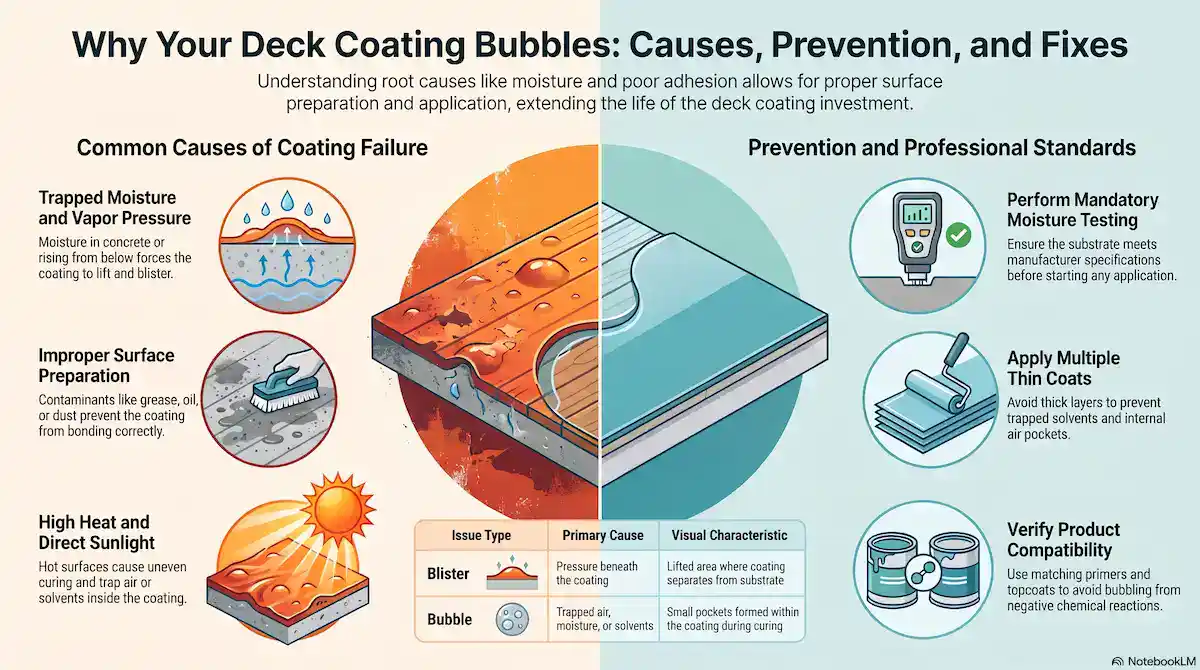
A blister occurs when pressure builds beneath the coating, causing it to lift away from the substrate. A bubble typically forms while the coating is still curing due to trapped air, moisture, or solvents.
Both issues weaken the protective barrier, allowing moisture and contaminants to penetrate the surface over time.
Moisture Trapped Beneath the Coating
One of the most common causes of deck coating blisters is trapped moisture. If the concrete slab contains excess moisture or water vapor is moving upward from below, pressure builds beneath the coating.
This pressure eventually forces the coating upward, creating blisters that may continue to grow if left untreated.
Common sources of moisture include:
- Concrete that has not fully cured
- Water intrusion from below the slab
- Poor drainage around the structure
- High groundwater levels
- Rain exposure before installation
Before applying any deck coating, contractors should perform moisture testing to ensure the substrate meets manufacturer specifications.
For guidance on concrete moisture testing, visit the American Concrete Institute (ACI): https://www.concrete.org
Poor Surface Preparation
A deck coating is only as strong as the surface beneath it. Improper preparation prevents the coating from bonding correctly, increasing the risk of bubbles and delamination.
Surface contaminants such as dirt, grease, oil, old coatings, and curing compounds interfere with adhesion.
Proper preparation usually includes:
- Pressure washing
- Mechanical grinding or shot blasting
- Crack repair
- Removing loose material
- Thorough cleaning before application
Skipping these steps often leads to premature coating failure.
Applying Coating During High Humidity
Weather conditions play a significant role in coating performance.
High humidity can slow curing and trap moisture inside the coating system. As temperatures rise, the trapped moisture expands, forming bubbles or blisters beneath the surface.
Manufacturers typically specify acceptable humidity levels for installation. Following these recommendations helps ensure a successful application.
Applying the Coating Too Thick
Many people believe thicker coatings provide better protection, but excessive thickness can actually create problems.
When a coating is applied too heavily:
- Solvents may become trapped
- The surface cures faster than the underlying material
- Air pockets remain inside the coating
- Internal pressure creates bubbles
Professional installers apply multiple thin coats rather than one overly thick layer.
Air Entrapment During Mixing
Improper mixing techniques can introduce air into the coating material.
High-speed mixing often creates thousands of tiny air bubbles that become trapped during application. As the coating cures, these bubbles rise to the surface, leaving visible imperfections.
Using the proper mixing equipment and following manufacturer instructions greatly reduces this risk.
Applying Deck Coating in Direct Sunlight
Hot surfaces accelerate curing.
If a coating begins curing before trapped air or solvents can escape, bubbles may form throughout the surface.
Direct sunlight can also create uneven curing, particularly on darker concrete surfaces that absorb more heat.
Professional contractors often schedule installations during cooler parts of the day to maintain consistent curing conditions.
Contaminated Concrete Surface
Even surfaces that appear clean may contain contaminants that interfere with adhesion.
Common contaminants include:
- Oil stains
- Silicone residue
- Wax
- Cleaning chemicals
- Salt deposits
- Dust
These materials prevent proper bonding and create weak spots where blisters eventually develop.
Incompatible Products
Not every coating system works with every primer or existing finish.
Applying incompatible materials may cause chemical reactions that produce bubbling, wrinkling, or adhesion failure.
Before installing a new deck coating, contractors should verify compatibility between:
- Primer
- Base coat
- Waterproof membrane
- Topcoat
- Existing coatings
Following the manufacturer’s complete system recommendations helps prevent these issues.
Improper Concrete Curing
Fresh concrete requires sufficient curing time before receiving a protective coating.
If coating is applied too early:
- Moisture remains inside the slab
- Concrete continues releasing water vapor
- Internal pressure causes blistering
Many concrete slabs require at least 28 days of curing, although the exact timeframe depends on environmental conditions and moisture test results.
Water Penetration Through Cracks
Small cracks may seem harmless, but they allow water to infiltrate beneath the coating.
As temperatures fluctuate, trapped moisture expands and contracts. Over time, this movement separates the coating from the concrete, producing visible blisters.
Routine inspections and prompt crack repairs help prevent long-term damage.
Signs That Blisters Require Immediate Attention
Small bubbles may seem cosmetic, but they often indicate more significant problems below the surface.
Watch for signs such as:
- Soft or spongy areas
- Peeling coating
- Water trapped beneath the surface
- Cracking around blisters
- Increasing blister size
- Discoloration
Addressing these issues early can prevent widespread coating failure.
How to Prevent Blisters and Bubbles in Deck Coating
Preventing blisters starts with proper planning and professional installation.
Some of the most effective preventive measures include:
- Test concrete moisture before coating
- Prepare the surface thoroughly
- Apply coatings within recommended temperature ranges
- Avoid installation during rain or high humidity
- Follow manufacturer mixing instructions
- Apply multiple thin coats
- Use compatible coating systems
- Allow sufficient curing between coats
- Repair cracks before coating
Routine maintenance also helps extend the coating’s lifespan by preventing water intrusion and surface deterioration.
How Are Blisters Repaired?
The repair method depends on the severity of the damage.
Minor isolated blisters may be repaired by removing the damaged coating, preparing the surface, and applying a compatible patch.
More extensive blistering often requires complete removal of the failed coating system, moisture correction, and full reinstallation.
Attempting to cover blisters without addressing the underlying cause usually results in recurring problems.
Why Professional Installation Matters
Deck coating systems involve more than simply applying a protective layer. Moisture testing, substrate preparation, environmental monitoring, and proper application techniques all contribute to long-term performance.
Experienced contractors understand how temperature, humidity, concrete condition, and product compatibility affect the finished result. Their expertise helps minimize the risk of blisters, bubbles, peeling, and premature coating failure.
Protect Your Deck Coating Investment
Blisters and bubbles in deck coating are more than cosmetic defects—they are often warning signs of moisture issues, poor surface preparation, improper application, or environmental factors. Identifying and correcting the root cause is essential for maintaining a durable, attractive, and long-lasting deck surface.
Whether you’re planning a new deck coating installation or noticing early signs of bubbling, taking action promptly can prevent more extensive damage and expensive repairs. Working with qualified professionals, following manufacturer guidelines, and investing in proper surface preparation will help ensure your deck remains protected for years to come.